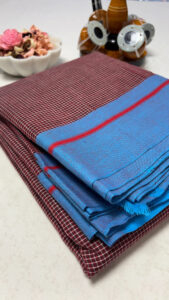
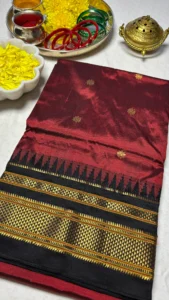
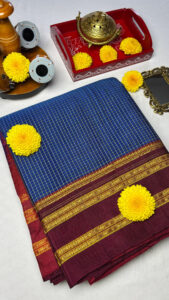
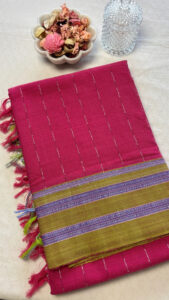
A good handloom saree can stay in your wardrobe for a long time, and how you handle it between wears makes a real difference. The right care depends on the fabric, the dyes and the finishing, which is why we keep our advice conservative. This guide shares simple, general habits for cotton and silk sarees. It does not replace the Wash Care label on the product page, and the label should always come first.
Start with the label
Every product page on our site lists Wash Care. In our range you will see two kinds of instruction:
- Dry Clean, which is listed on our Ilkal sarees, whether pure cotton, cotton silk, viscose cotton, art silk or pure silk.
- Hand wash in cold water with mild detergent, which is listed on our Patteda Anchu Handloom Cotton Saree (Checks) and the plain version.
This difference surprises people, since an Ilkal cotton saree may be labelled Dry Clean even though cotton seems easy to wash. The reasons can include the silk pallu, the dyes, the zari and the finishing. We follow the label, and we suggest you do too. If your saree is labelled Dry Clean, we do not recommend washing it at home.
After you wear it
- Air it first. Spread the saree on a bed or a clean surface in a shaded, ventilated place for a while before folding. This lets the fabric release any moisture from the day.
- Keep scent away from the fabric. Apply perfume and other sprays before you dress, and let them dry. Spraying directly on silk or cotton can leave marks.
- Check the details. Look at the pallu, the border, the pleats and any tassels for snags or stains. Catching a problem early makes it easier to deal with.
Stains and cleaning
If something spills, blot it gently with a clean, dry cloth and avoid rubbing, which can spread the stain and roughen the weave. Do not use stain removers or household cleaners on the saree. For a saree labelled Dry Clean, take it to a dry cleaner promptly and point out the stain. It helps to tell them that the saree is handloom or has a silk pallu and a zari border, so they can handle it with care.
If your label says hand wash
For Patteda Anchu, the label says to hand wash in cold water with mild detergent. A few general habits go with that:
- Wash it on its own, so any colour from other clothes does not transfer.
- Move the saree gently in the water instead of scrubbing or wringing it hard.
- Rinse until the water runs clear, then dry it in the shade. Direct sun for long periods can fade colour.
These extra points are general good practice and not part of the label. Deeply coloured sarees can release dye when they are wet, so wash them separately.
Ironing
If you press your saree, work on the reverse side with a thin cloth between the iron and the fabric. Use a lower heat setting than you think you need, and avoid pressing directly on zari or on embroidery such as Kasuti. When in doubt, ask your dry cleaner to press it. Silk and silk-blend pallus are usually the most sensitive parts.
Storing your saree
- Use breathable wrapping. A clean cotton or muslin cloth works well. Plastic bags can trap moisture, so we suggest avoiding them for long storage.
- Keep it dry and clean. Store sarees away from damp walls, bathrooms and direct sunlight.
- Refold now and then. If a saree stays in one fold for months, the creases can set. Refold along different lines every few months.
- Separate by colour. Keep deep and light colours apart.
- Protect the zari and the tassels. Fold so that zari borders do not rub against rough surfaces, and tuck in handwoven tassels so they do not tangle.
- Avoid leaving it on a hanger. A saree hanging for long can stretch and lose shape at the shoulder. Folded storage is usually kinder.
Fabric notes
Cotton
Handloom cotton is breathable and has a natural texture, and small irregularities in the weave are part of its character. Our pure cotton sarees are light and soft, so protect them from snags and keep them dry in storage.
Silk and cotton silk
Silk is more sensitive to moisture, perfume and sun than cotton. If you own a pure silk saree or one of our cotton silk sarees, keep it away from direct sunlight and dampness, and let a professional clean it as the label says.
Viscose cotton
For our viscose cotton sarees, the label reads Dry Clean, so follow it rather than treating the saree like an everyday cotton.
A simple routine to remember
- Read the Wash Care label before the first wear.
- Apply perfume first, then dress.
- Air the saree in the shade after wearing it.
- Blot spills and avoid rubbing, then get a Dry Clean saree to a professional cleaner.
- Store it folded in breathable cloth, in a dry place, and refold now and then.
Things to avoid
- Do not wash a Dry Clean saree at home.
- Do not use stain removers, bleach or harsh cleaners on handloom fabric.
- Do not leave a saree in damp storage or in long periods of direct sun.
When you are unsure
If you have a question about a stain, a snag or storage, the safest first step is to avoid doing anything drastic. Stop, keep the saree dry and ask for guidance. You can reach us on WhatsApp, and we will tell you what we can based on the product label. For a stubborn stain on a valuable saree, a professional cleaner is a better option than experimenting at home.
Looking after a saree is mostly about small habits, and a little attention goes a long way. You can explore our handloom sarees and the full shop to see the care label for each design.
Related guides
- Pure cotton vs cotton silk vs viscose cotton sarees
- Ilkal saree guide: history, weave and how to wear it
- How to identify an authentic Ilkal saree
Shop the sarees in this guide
Care labels differ by product, so check the Wash Care line on each page for these cotton, cotton silk and silk sarees.
 Patteda Anchu Handloom Cotton Saree (Checks) Price range: ₹2,199 through ₹2,299
- Gayatri Border Pure Cotton Handloom Ilkal Saree Price range: ₹3,399 through ₹3,599
- Heritage OG Cotton Silk Ilkal Saree Price range: ₹5,299 through ₹5,599
- Pure Silk Ilkal Saree₹8,699