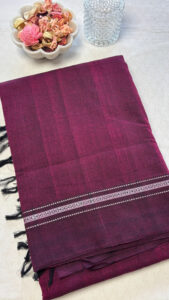
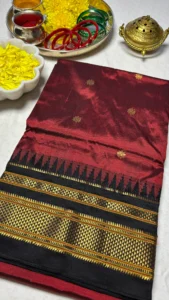
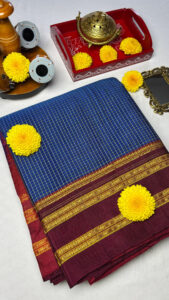
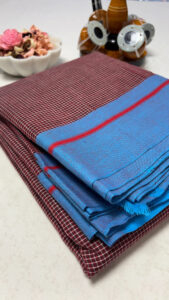
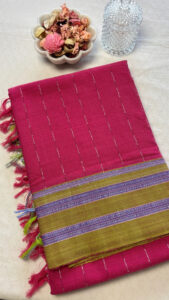
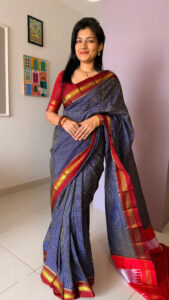
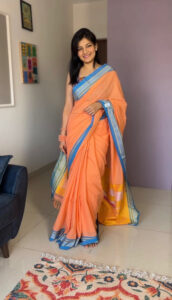
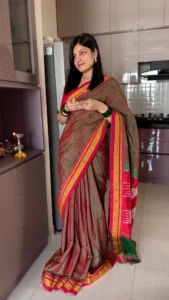
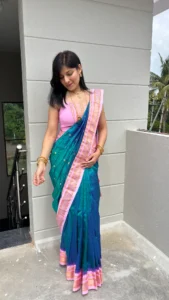
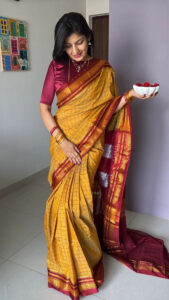
An Ilkal saree is easy to recognise once you know what to look for, and just as easy to love once you have worn one. This guide covers where the saree comes from, how it is made, what the borders and motifs mean and a few practical ways to wear it. We keep to what is widely known and to what we can see on the sarees we sell.
Where Ilkal sarees come from
Ilkal is a town in Bagalkot district, in northern Karnataka. The Ilkal saree is the traditional handloom saree of this region, and it carries a Geographical Indication (GI) tag, which ties the name to its place of origin. It has long been part of everyday and festive dressing in North Karnataka. We have chosen not to attach dates to its history, since we would rather be accurate than impressive.
How an Ilkal saree is put together
A cotton body, a silk pallu
Traditionally the body of an Ilkal is cotton, while the pallu and border are silk or art silk. Today you will find variations, including viscose-cotton blends, cotton-silk blends and a pure silk body. We list the exact fabric on every product page so there are no surprises.
The Tope Teni join
The signature of the weave is how the pallu is attached. It is woven separately and then joined to the body through the Tope Teni interlocking technique. It is part of the weaving, not an afterthought, and it is why many people consider the join the identifying feature of an Ilkal. Our pages describe this on handloom pieces such as the Minimal Chikki Paras Border Pure Cotton Handloom Ilkal.
Handloom and powerloom
Not every Ilkal-design saree is handloom. We sell both, and each page states the weave. Our handloom sarees are collected under handloom sarees, while powerloom designs sit in the wider Ilkal sarees category.
The vocabulary of borders and motifs
- Tope Seragu: the pallu motif, inspired by the jowar fields of North Karnataka.
- Gayatri border: a rounded border inspired by the sacred Rudraksha seed.
- Chikki Paras border: believed to resemble brinjal seeds, while some people associate it with stars.
- Kasuti: a traditional Karnataka embroidery. On our sarees it appears as peacocks, elephants, diyas, Tulasi Katte and Hans, motifs traditionally considered auspicious.
- Tana silk: the name we use for our festive Ilkals in an art silk and cotton blend, with checks and temple-inspired borders.
Knowing these terms makes shopping easier. A page that says “Gayatri border” or “Chikki Paras border” is telling you exactly what you will see along the edge of the saree.
Choosing an Ilkal for how you want to wear it
The fabric is the best guide.
- Pure cotton is light, breathable and suited to everyday dressing. See the pure cotton sarees.
- Cotton silk is rich yet restrained, with zari borders. See the cotton silk sarees.
- Viscose cotton brings a soft sheen and an easy drape. See the viscose cotton sarees.
- Pure silk suits festive and traditional occasions. See the pure silk sarees.
How to wear an Ilkal saree
There is no special rule for draping an Ilkal. Most people wear it in the usual Nivi style, and the saree does the work. These are a few practical notes.
- Plan for the length. Our Ilkal sarees are usually 6.2 metres, so there is enough fabric for pleats and a pallu that falls well. One of our Gayatri border sarees is slightly longer at 6.3 metres.
- Let the pallu show. The Tope Seragu pallu is the feature of an Ilkal. Spread the pallu neatly over your shoulder so the motif and the border are visible.
- Keep the pleats tidy. Cotton holds pleats differently from silk, so a little patience in setting them, and a pin where you need one, goes a long way.
- Pick the blouse with intent. Many of our sarees come with a running blouse piece, and others with a contrast blouse piece. A contrast blouse lets the border stand out, while a matching one gives a quieter look.
- Keep the rest simple. The border and pallu already carry a lot of detail, so understated jewellery works well.
For the day and for the evening
For the day, a pure cotton Ilkal such as the Chikki Paras Pure Cotton Handloom Ilkal Saree is described on its page as made for everyday luxury, from quiet office days to unhurried coffee dates. For celebrations, our Heritage collection of cotton-silk Ilkals, with zari borders, is described as rich without being overpowering.
Questions people often ask
Is every Ilkal saree handloom?
No. Both handloom and powerloom sarees follow Ilkal designs, so check the Weave attribute and the Handloom Mark on the product page. If you want to understand the difference in more detail, read our guide to the cues that help you identify an authentic Ilkal, which covers the GI tag, the Handloom Mark and the Tope Teni join.
Does an Ilkal saree come with a blouse piece?
On our product pages, yes: each lists either a running blouse piece or a contrast blouse piece. Check the page for the saree you like.
How long is an Ilkal saree?
Most of ours are 6.2 metres. A few differ slightly. The Patteda Anchu cotton sarees from Gajendragadh, for instance, are 6 metres, and the pure silk Ilkal is 6.10 metres, so look at the listing.
A note on care
Follow the Wash Care label on the product page. Most of our Ilkal sarees are listed as Dry Clean. We have a separate care guide with general tips on storing and handling handloom sarees.
Where to begin
If you are new to Ilkal sarees, begin with the fabric you are most comfortable in, and use the borders to pick the look. You can browse all of our designs in the shop. We ship free across India and offer cash on delivery, and if you would like help choosing, you can message us on WhatsApp.
Related guides
- How to identify an authentic Ilkal saree
- Pure cotton vs cotton silk vs viscose cotton sarees
- Timeless Indian wear: handloom sarees for everyday and occasions
Shop the sarees in this guide
See the borders, pallus and motifs from this guide on sarees you can browse, from handloom cotton to cotton silk and Kasuti work.
 Minimal Chikki Paras Border Pure Cotton Handloom Ilkal Price range: ₹3,499 through ₹3,699
- Chikki Paras Pure Cotton Handloom Ilkal Saree Price range: ₹3,199 through ₹3,599
- Heritage Kasuti Cotton Silk Ilkal Saree₹5,499
- Traditional Kasuti Ilkal Saree₹2,799